What is Glass Frit? Everything You Need to Know About Its Applications and How to Choose the Right Material!
As electronic devices continue to evolve toward higher performance, greater reliability, and further miniaturization, electronic pastes have become indispensable materials in the manufacturing of semiconductor packages, displays, solar cells, thick-film circuits, and a wide range of electronic components. Among their key constituents, glass frit serves as an essential inorganic functional filler, playing multiple roles including bonding, encapsulation, insulation, and sintering promotion. By precisely controlling the glass composition, softening temperature, coefficient of thermal expansion (CTE), and chemical stability, glass frit enables reliable bonding between different materials under relatively low-temperature processing conditions while enhancing mechanical strength, hermeticity, and long-term reliability.
In electronic paste formulations, glass frit is far more than a simple bonding phase—it is a critical factor that directly influences product performance and manufacturing yield. Whether used in silver conductive pastes, photovoltaic electrode pastes, MLCC internal and external electrodes, semiconductor packaging materials, or glass-to-ceramic bonding applications, glass frit improves adhesion between metallic conductors and substrates through its melting behavior and interfacial reaction capability, helping to form stable and highly reliable electronic structures. With the rapid growth of renewable energy, high-frequency communications, and advanced semiconductor packaging technologies, the demand for low-temperature sintering, high-reliability, and customized glass frit materials continues to increase, making glass frit one of the indispensable core materials in the electronics industry.
The Essential Material That Determines Electronic Reliability
When people think of glass, they usually picture its application in architecture, display panels, or containers. Yet within the electronics industry, there is another type of glass that plays a vital role—glass frit.
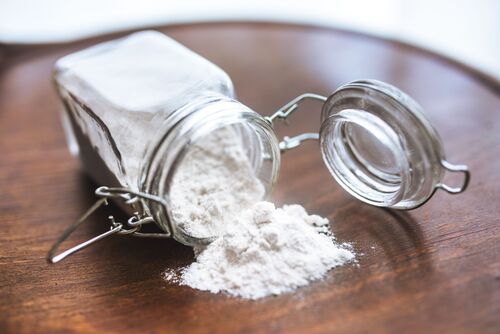
Glass frit is a finely powdered material produced by melting specially formulated glass, rapidly quenching it, and then crushing and milling it into microscopic particles. Its precisely controllable softening temperature, coefficient of thermal expansion (CTE), excellent electrical insulation, and chemical stability make it widely used in electronic components, ceramic substrates, semiconductor packaging, automotive electronics, and precision manufacturing.
As modern electronic products continue to demand higher reliability, greater miniaturization, and lower-temperature processing, glass frit has become an indispensable functional material that underpins the performance and durability of today's advanced electronic devices.
Key Functions of Glass Frit in Electronic Materials
1. As a Sintering Aid
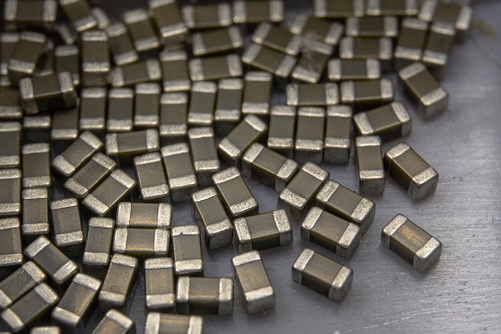
Sintering is a critical manufacturing process in which powdered materials are heated to form a dense, consolidated structure. In ceramic materials, multilayer ceramic capacitors (MLCCs), resistors, inductors, and various electronic components, glass frit is commonly incorporated into metal or ceramic powders as a sintering aid.
When heated to its softening temperature, the glass frit begins to soften and flow, filling the voids between particles and promoting the formation of particle necks (necking). This process enhances densification and bonding strength while simultaneously reducing the overall sintering temperature.
Key benefits include:
- Lower sintering temperature
- Higher material density
- Improved adhesion between metals and ceramics
- Enhanced manufacturing yield
- Reduced energy consumption
2. As a Protective Coating for Electronic Components
The electrodes of many electronic components are susceptible to attack from plating solutions, moisture, chemicals, and other environmental factors. To address this, glass frit is formulated into glass paste, which is screen-printed and fired to form a durable protective overcoat.
This glass protective layer provides:
- Electrical insulation
- Moisture resistance
- Chemical corrosion resistance
- Resistance to plating solutions
- Improved component reliability
Such protective coatings are widely used in the manufacture of chip resistors, thermistors, and other passive electronic components.
3. As a Packaging and Hermetic Sealing Material
Another important application of glass frit is in electronic packaging.
It is widely used in the packaging of:
- Crystal oscillators
- MEMS devices
- Sensor packages
- Power semiconductor devices
Glass frit forms a hermetic sealing layer that provides excellent airtightness and strong bonding, effectively preventing moisture and contaminants from penetrating into sensitive electronic components.
This hermetic sealing capability is particularly critical for automotive electronics, aerospace electronics, and industrial equipment, where long-term reliability under harsh operating environments is essential.
4. A Key Material for Low-Temperature Co-fired Ceramics (LTCC)
Low-Temperature Co-fired Ceramic (LTCC) is a critical substrate technology for high-frequency communication modules, RF components, and 5G communication equipment.
Pure ceramic materials typically require sintering temperatures above 1,300°C. However, by incorporating glass frit, the sintering temperature can be reduced to approximately 850°C, allowing ceramic substrates to be co-fired with silver or copper electrodes.
As a result, glass frit has become an indispensable component of LTCC material systems, enabling low-temperature processing while maintaining excellent electrical performance and structural reliability.
How to Select the Right Glass Frit
Selecting the appropriate glass frit is not simply a matter of comparing prices. Instead, it requires careful consideration of the material system, processing conditions, and end-use application.
1. Coefficient of Thermal Expansion (CTE)
The coefficient of thermal expansion (CTE) is one of the most critical selection criteria.
If the CTE of the glass frit differs significantly from that of the substrate, thermal stresses can develop during the cooling stage after firing, leading to:
- Cracking
- Warpage
- Delamination
- Stress concentration
Therefore, the CTE of the glass frit must be carefully matched with that of the ceramic, metal, or packaging substrate to ensure reliable bonding and long-term structural integrity.
2. Softening Temperature
The softening temperature determines when the glass frit begins to soften and flow during the firing process.
If the softening temperature is too low, it may result in:
- Excessive glass flow
- Pattern deformation
Conversely, if the softening temperature is too high, it may lead to:
- Insufficient sintering
- Reduced bonding strength
Therefore, the glass frit formulation should be selected to match the processing temperature window, ensuring optimal flow behavior, adequate densification, and reliable adhesion.
3. Dielectric Properties
For high-frequency communications, 5G networks, and high-speed computing applications, a lower dielectric constant (Dk) is generally preferred, as it helps minimize signal delay and transmission loss.
Different glass systems exhibit different dielectric properties. Typical dielectric constant (Dk) ranges include:
- Bi-based glass: approximately 5–7
- Zn-based glass: approximately 2–4
- Si-based glass: approximately 2–3
For high-frequency electronic materials, glass systems with lower dielectric constants are generally preferred to achieve superior signal integrity and high-speed transmission performance.
4. Chemical Resistance and Chemical Stability
For applications in which electronic components are subjected to post-processing treatments such as:
- Electroless nickel plating
- Electroplating
- Acid cleaning
- Alkaline cleaning
the chemical stability of the glass frit becomes a critical consideration.
Glass frits with high chemical resistance can withstand corrosive processing environments, preventing degradation of the protective layer and thereby enhancing the long-term reliability and durability of the finished product.
Comparison of the Three Major Glass Frit Systems
Bi-based Glass (Bismuth Glass)
| Key Characteristics | Typical Applications |
|---|---|
|
|
Zn-based Glass (Zinc Glass)
| Key Characteristics | Typical Applications |
|---|---|
|
|
Si-based Glass (Silica Glass)
| Key Characteristics | Typical Applications |
|---|---|
|
|
As 5G communications, AI servers, automotive electronics, and advanced semiconductor packaging continue to evolve, glass frit is no longer merely a conventional inorganic filler—it has become a critical functional material that determines the performance and reliability of modern electronic materials.
From sintering aids and electronic packaging materials to electrode protective coatings, each glass system offers distinct characteristics in terms of coefficient of thermal expansion (CTE), softening temperature, dielectric properties, and chemical stability. Consequently, selecting the appropriate glass frit not only affects manufacturing yield but also has a direct impact on product lifetime, long-term reliability, and overall market competitiveness.
Looking ahead, as high-frequency and high-speed electronic technologies continue to advance, glass frit materials that combine low dielectric properties, high reliability, and environmentally friendly formulations will play an increasingly vital role in the electronics industry.
#ElectronicPaste #GlassFrit #GlassPowder #MLCC #SinteringAid #ElectronicMaterials #SemiconductorPackaging #5G #AutomotiveElectronics #AdvancedPackaging
CONTACT US
Kelly Chemical Corporation
Electronics
TEL:(02)2762-1985 ext 11200
Online Message
Leave your contact information,
and we will get in touch with you soon.
Email Consultation
After receiving your email,
we will process it as soon as possible.send Email


