TPCA Show 2025: From AI Servers to Advanced Packaging: High-Performance Materials Become a Key Driver in the PCB Industry
This year's TPCA Show is arguably the "hottest" in years. It's not just because of the crowds, but because the market's enthusiasm for AI servers, high-speed computing, and advanced packaging keeps heating up. Major PCB manufacturers and material suppliers centered their exhibits around three key themes: "high frequency/speed, thermal management, and miniaturization," showcasing a wide range of new technologies and products.
Investors, on the other hand, are closely watching the supply outlook of high-end copper foil, fiberglass fabric, and resin, which have recently seen reports of shortages, as well as the development progress of CCL manufacturers working on M9 and even M10-grade materials. This reflects a critical moment for Taiwan: whoever secure key materials and technologies will continue to grow amid the AI boom.
In this boom, materials are no longer just the "supporting base" of substrates; they have become core determinants of signal stability, thermal conductivity, and product lifespan. In particular, low-dielectric (Low Dk, Df), high-thermal-conductivity, high-heat-resistance, and low-thermal-expansion resin and filler systems are rapidly becoming the focal point of the industry.
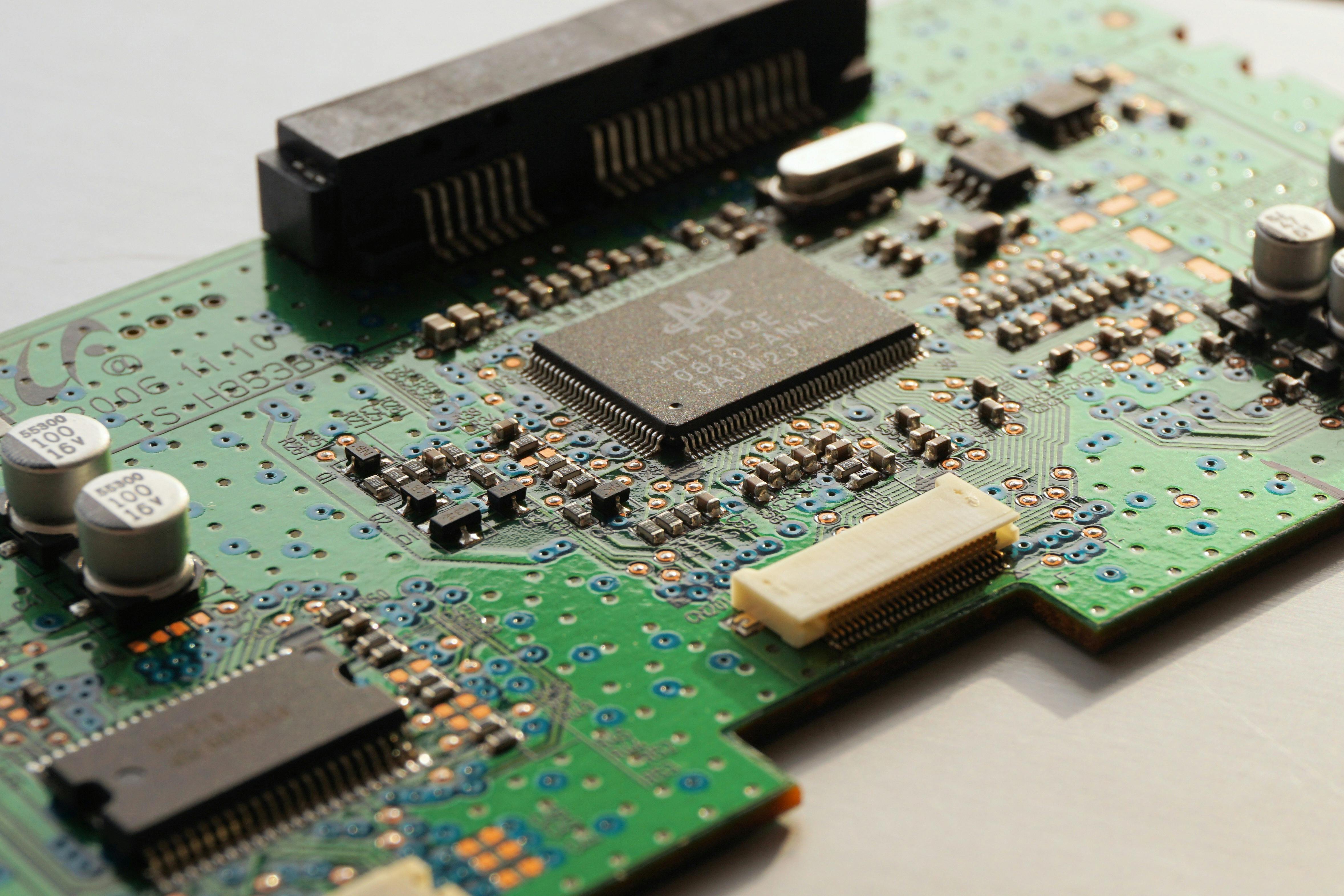
- Low Dielectric: The Material Threshold in the High-Speed Transmission Era
With the introduction of AI servers, HPC systems, and 5G base stations driving the demand for high-speed signal transmission, the dielectric properties of CCL (Copper-Clad Laminates) and substrate materials have become a critical qualification for entering the supply chain.
Currently, the most common high-performance low-dielectric resins include polyphenylene oxide (PPO), hydrocarbon, PTFE, and BMI, often combined with fillers such as spherical silica and hollow silica. In addition to the crucial electrical properties, factors like heat resistance, processability, and material compatibility are equally important considerations in formulation design. Achieving the optimal balance requires continuous collaboration and fine-tuning between material suppliers and product developers — much like how a chef's skill is essential, yet a truly exquisite dish also depends on the quality, texture, and freshness of the ingredients.
- High Thermal Conductivity × High Heat Resistance: A Major Challenge for Copper-Clad Laminates
As AI computing power consumption continues to rise, substrate and dielectric materials must deliver both thermal conductivity and insulation performance. Common thermally conductive fillers such as alumina (Al₂O₃) and boron nitride (BN) offer excellent heat dissipation, yet often face challenges in processability and compatibility with resins.
Our surface-modifiable inorganic fillers and heat-resistant resins are specifically designed to address this pain point. By precisely controlling particle size distribution and surface energy, the fillers can be uniformly dispersed within the resin matrix, thereby enhancing thermal conductivity while maintaining flowability and long-term reliability.
- Low Thermal Expansion: The Core for High-Reliability Substrates
In the manufacturing of copper-clad laminates (CCL) and packaging materials, controlling the coefficient of thermal expansion (CTE) is a key factor that determines reliability. When materials experience repeated thermal cycling, a mismatch in expansion rates between the resin, copper foil, or chip can lead to warpage, cracking, or delamination.
To further suppress such thermal stresses, the industry has begun introducing negative thermal expansion (NTE) fillers such as ZrW₂O₈ and Al₂TiO₅. These materials exhibit slight contraction upon heating, creating a complementary effect when combined with resins or positive-expansion fillers — achieving extremely low or even near-zero overall expansion.
By integrating NTE materials with low-CTE resin systems, substrates can attain significantly improved dimensional stability during reflow, assembly, and high-temperature operation, making this approach an essential direction for advanced packaging and high-frequency, high-speed circuit boards.

- From Raw Materials to Applications: Kelly's Evolving Role in the PCB Supply Chain
Amid the many conversations at this year's TPCA Show, one clear trend emerged — material suppliers are evolving from mere "raw material providers" to collaborative "application co-developers."
At Kelly, we not only continue to supply advanced materials, but also actively support our customers through formulation adjustments, testing, and process optimization, serving as a solid partner in new product development.
From resins, fillers, flame retardants, and dispersants to surface treatment agents, our goal is to make materials the true foundation of innovation, ensuring that breakthroughs at the lab level can be successfully realized in end products.
#TPCA2025 #NegativeCTE #NegativeThermalExpansion #NTE #AntiWarpage #LowDielectricConstant #LowDissipationFactor #HighFrequencyHighSpeed #AdvancedPackaging #HighThermalConductivity
CONTACT US
Kelly Chemical Corporation
Electronics
TEL:(02)2762-1985 ext 11200
Online Message
Leave your contact information,
and we will get in touch with you soon.
Email Consultation
After receiving your email,
we will process it as soon as possible.send Email


